How to speedrun from Bronze to Unreal in Fortnite Reload without losing your mind
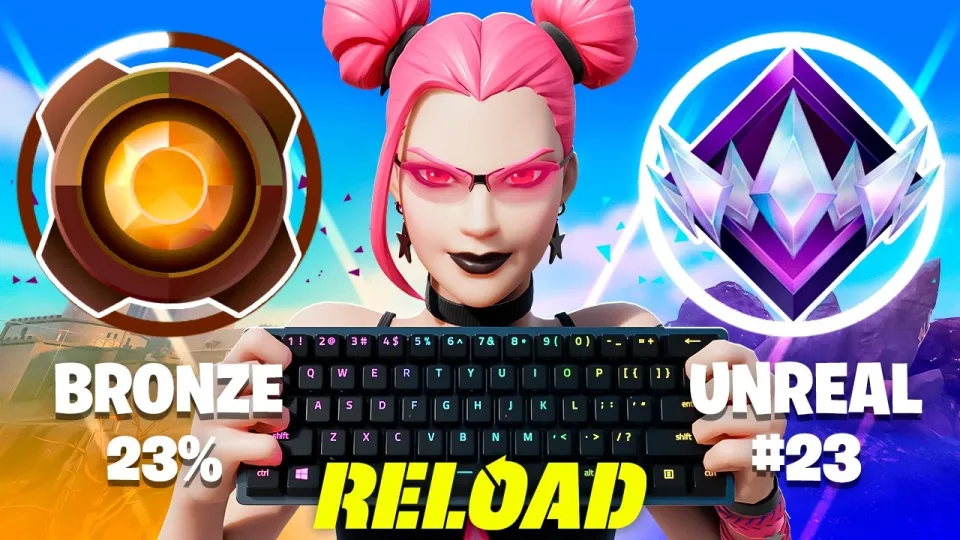
Video: BRONZE To UNREAL Ranked Speedrun In Fortnite Reload!
You can order the same kind of articles for your own video to boost it on YouTube and Google. Just message the Telegram bot @sat_sit_bot. The bot writes and publishes the articles itself (with your YouTube video embedded) on popular topical websites (no ads). Try it free: 50 articles on us.
· based on the channel HaloBT
Key takeaways
- Fortnite Reload is a faster, smaller-map mode, so a Bronze-to-Unreal climb is measured in hours of queue time, not weeks of grinding.
- The bottleneck ranks are Gold and Platinum: that is where placement alone stops paying and elimination points decide the rank.
- Solo queues are the cleanest speedrun route; duo fills add variance from random teammates but give revive and reboot chances.
- Early-game aggression pays in Bronze and Silver, while Diamond and Elite reward safe rotates and stacked endgames.
- Practice maps and creative drills cut the mechanical gap faster than grinding ranked lobbies with weak builds.
A Bronze to Unreal speedrun in Fortnite Reload is a single continuous ranked climb where you start at the bottom of the ladder and push to the top tier as fast as possible, usually solo and usually in one long session. The method is to farm early elimination points in low ranks, then switch to placement-heavy, low-risk endgames once Gold and Platinum start punishing careless fights. HaloBT's run of this exact challenge shows the shape of it, and you can grab his practice maps and Fortnite profile through his Epic creator page before you queue.
What makes Fortnite Reload different from a normal ranked climb
Fortnite Reload compresses the ranked experience: smaller map, respawns while teammates are alive, and shorter matches, which means more rank points per hour. Because the mode is built around fast re-engagement, a speedrun here is really a test of how quickly you can convert a hot drop into points rather than how long you can survive. The practical consequence is that your climb speed depends on queue throughput and consistency, not on a single lucky win.
The rank ladder itself runs from Bronze through Silver, Gold, Platinum, Diamond, Elite, Champion and finally Unreal, and each tier has its own point thresholds and percentage cutoffs. Unreal is not a fixed number of points — it is a percentile bracket, so the top of the ladder keeps moving as more players reach it. That is why the last stretch of any speedrun feels like a different game: you are no longer chasing a threshold, you are racing other players who are also climbing.
How to plan the run before you press play
A speedrun is won in the setup, so decide your queue type, your landing plan and your session length before the first match. Three decisions matter most.
- Queue type. Solo queues remove teammate variance and give you full control of every fight. Duo fills are faster to find matches and give you revive chances, but a random partner can throw a Diamond lobby in thirty seconds.
- Landing plan. Pick two or three named locations you know cold and rotate between them based on the bus path. Familiar loot routes beat contested hot drops once you are above Silver.
- Session length. Reload matches are short, but rank points compound across a sitting. Plan one long block rather than scattered sessions, because a cold first match costs you the same points as a warm one.
Before you start, warm up in a creative map for ten to fifteen minutes. HaloBT publishes mechanics training maps under his creator code, and the point of a warm-up is not to get tired — it is to make your first three ranked matches look like your tenth.
How the point math changes at each rank
Bronze and Silver are forgiving: placement points carry you and early eliminations accelerate the process. In those tiers, take fights you can win, because the point loss for a bad drop is small and the point gain for a clean elimination is large. This is the phase where a speedrun builds its lead over a casual climb.
Gold and Platinum are the wall. At this point the lobby punishes third-partying and the placement points alone stop covering a bad match. The fix is a shift in priorities: stop chasing every fight, start holding high ground and rotating early, and treat a top-five finish as the baseline rather than a bonus. Players who stall in Gold almost always stall because they keep playing the Bronze game in a Platinum lobby.
Diamond, Elite and Champion reward the opposite skill set — patience plus a single decisive fight. You want to be the player who arrives at the final circles with full mats, a stacked loadout and a clean zone read. That is also where the speedrun becomes visible to spectators: the difference between a fast run and a slow one is usually a handful of endgames where the player took a fight they did not need.
Which loadout and mechanics actually matter in Reload
Fortnite Reload rewards mobility and sustain more than a standard battle royale match, because re-engagement is constant and a fight rarely ends after one kill. Build your inventory around three jobs: a reliable mid-range weapon, a close-range finisher, and something that lets you reset a bad position.
- Shotgun plus assault rifle is the default core; it covers the two distances where Reload fights actually happen.
- Mobility items are worth a slot in Diamond and above, where rotating into zone early is the difference between a top-five and a scramble.
- Heals and shields should be topped up before every rotate, not after you take damage.
- Materials matter more than in a normal match because Reload fights chain together; arriving at the endgame with zero builds is a death sentence.
Mechanically, the highest-return drills are edits and piece control, not aim trainers. Console and controller players especially should spend warm-up time on build-fight reps, since the gap between a controller player and a keyboard player in Reload is usually edit speed, not tracking.
Common questions from players stuck mid-ladder
The most frequent frustration from viewers of this kind of run is that improvement slows down after switching input or after a good season. That is normal and it has a mechanical cause: early gains come from fixing obvious mistakes, and later gains come from shaving small inefficiencies that are hard to see without review.
The fix is to record your matches and watch only your deaths. For each death, write one sentence about what you could have done differently — a rotate, an early heal, a fight you should have refused. Ten reviewed deaths teach more than fifty unreviewed matches, and it costs you an hour instead of a week.
A second recurring question is about rank anxiety in Gold specifically. Gold lobbies feel harder than they are because the player pool is widest there, mixing genuine beginners with players who are climbing fast. The answer is not to play safer in every match; it is to play the same disciplined mid-game every match and let the point math work itself out.
A third theme is controller versus keyboard. Neither input decides your rank in Reload — consistency does. A controller player with clean piece control and good zone reads will out-climb a keyboard player who takes every fight.
Useful links
- HaloBT's Fortnite creator page — practice maps and profile
- HaloBT Discord community
- HaloBT on Twitch
- HaloBT on Twitter
- HaloBT on Instagram
What a Bronze to Unreal run really teaches
A Bronze to Unreal speedrun in Fortnite Reload is less about raw aim and more about matching your strategy to the rank you are in. The climb has two distinct games inside it: an aggressive points-farming phase in Bronze through Silver, and a disciplined, placement-first phase from Gold upward. Players who fail to switch between those two modes are the ones who spend a whole session bouncing around Platinum.
The run also exposes how much of ranked is queue discipline — warming up, picking a landing plan, and reviewing deaths instead of grinding on autopilot. If you want the maps and drills used to prepare for this kind of challenge, start with HaloBT's creator page, where the practice builds and Fortnite profile live. HaloBT's channel is the source of this breakdown, and the full Bronze to Unreal attempt is worth watching for the endgame decisions alone.
Questions & answers
How long does a Bronze to Unreal speedrun take in Fortnite Reload?
It depends on queue speed and win rate, but Reload's short matches mean the climb is measured in hours of play rather than weeks. A strong player who converts most matches into top-five finishes can move several tiers in a single long session, while a player who stalls in Gold will take far longer.
Is it faster to speedrun in solos or in duo fills?
Solos are the cleaner route because you control every decision and there is no random teammate variance. Duo fills find matches faster and give you revive chances, but one careless partner in a Diamond lobby can cost you the points you gained over several matches.
Why do I get stuck in Gold every season?
Gold has the widest player pool, mixing beginners with fast climbers, so lobbies feel harder than the rank suggests. The usual cause is playing the Bronze strategy — chasing every fight — in a tier where placement points and safe rotates decide the outcome.
Do I need a keyboard to reach Unreal in Fortnite Reload?
No. Input matters far less than consistency, piece control and zone awareness. Controller players who drill edits and build fights regularly climb as fast as keyboard players who take unnecessary fights.
Source: BRONZE To UNREAL Ranked Speedrun In Fortnite Reload! · Markdown version